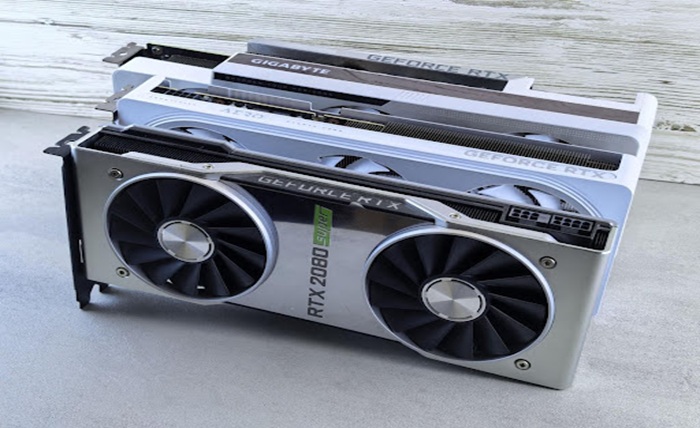
Nvidia is cutting GeForce RTX 5000 gaming production by 30 to 40 percent through the first half of 2026, redirecting that capacity toward server and AI GPUs, Notebookcheck reported in December 2025. That decision turned a gaming GPU shortage and an AI video rendering problem into the same story: memory that used to go to retail is going to data centers instead, and the sections below cover why, what it does to render queues, and whether renting beats waiting it out.
Why a High-Performance GPU Rental Beats Waiting Out a Local Hardware Limit
A local hardware limit does not go away just because the workload is temporary. Generating a batch of AI video at a higher resolution or a longer duration can need more graphics memory than a card actually has, and buying a bigger card for one project rarely makes financial sense this year.
That is the gap a high-performance GPU rental platform like Lium.io is built to fill, letting a creator run a demanding job on capable hardware for exactly as long as it takes, billed by the second, instead of buying a card that sits unused once the project ships. The math only gets more favorable while retail prices keep climbing rather than settling after launch.
How a Gaming GPU Shortage Turned Into an AI Video Rendering Problem Too
Notebookcheck reported in December 2025 that Nvidia plans to cut GeForce RTX 5000 gaming production by 30 to 40 percent in the first half of 2026, naming the RTX 5060 Ti 16GB and RTX 5070 Ti as most affected, since they are the most affordable cards carrying 16GB of memory.
Those two cards are a common recommendation for anyone running AI video generation tools locally, precisely because 16 gigabytes is usually the minimum for comfortable headroom. A production cut aimed at gaming demand still lands on that same shelf.
Headroom matters more for generation than gaming: a game can lower a texture setting to fit a smaller frame buffer with little visible loss, but a video diffusion model does not have that option. Once a project needs more memory than the card carries, the only options left are slower, not smaller.
Why Nvidia Is Sending Memory to Data Centers Instead of Retail
The shortage is not a chip problem, it is a memory problem: Nvidia is sending GDDR7 supply toward server and AI GPUs instead of retail because that segment sells at a far higher margin than a consumer gaming card ever will, even with gaming demand for current cards already down.
- Nvidia scrapped its planned RTX 5000 Super refresh entirely rather than ship it without the memory it needed.
- Those cards were supposed to carry 50 percent more graphics memory for the same price as the models they replaced.
- The models actually being cut, the RTX 5060 Ti 16GB and RTX 5070 Ti, are the ones with the most memory per dollar in the current lineup.
Cancelling a lineup outright, instead of delaying it, means Nvidia does not expect the memory to arrive in a useful window at all.
What Longer Render Queues Mean for Creators Working With AI Video Tools
AI video generation is not a single-component workload, which is why a memory shortage on one card can bottleneck an entire pipeline. As pc-bottleneck.com’s own breakdown of CPU and GPU bottlenecks in AI video generation explains, the limiting component can shift mid-task: model loading depends on storage and system memory, generation itself depends heavily on the GPU, and final encoding can shift work back to the CPU.
That same piece notes what happens once a project outgrows the card’s VRAM: the job either spills into system memory or processes in smaller sections, and both slow generation time, sometimes enough to fail outright. A shrinking supply of affordable, higher-memory cards lowers that ceiling for more people, not fewer.
| Pipeline stage | What typically limits it |
| Loading the model | Storage speed and system memory |
| Generating frames | GPU compute and available VRAM |
| Final encoding | CPU |
Testing Whether a Rented GPU Session Beats Waiting for Stock
Waiting for the shortage to ease is not obviously the better bet either. Notebookcheck’s own reporting ties the production cut to a DRAM shortage with no clear end date attached, not a temporary launch-window squeeze that resolves itself in a few months.
Renting a session on a high-performance GPU is the more rational fix for anyone whose AI video queue depends on memory Nvidia has decided to sell to a data center instead. Buying a new card to solve a problem that is really a supply decision made in a boardroom is a bet on Nvidia changing its mind. Renting the hours actually needed is a bet on nothing at all.