Introduction
When we speak of efficient and dignified aid distribution in Malaysia, the name My Kasih stands out as a beacon of innovation and compassion. Founded in 2009 by Tan Sri Dr. Ngau Boon Keat and his wife Puan Sri Jean Ngau, My Kasih began with a simple, yet profound intention: to help families in a way that is transparent and trustworthy, ensuring they get exactly what they need, when they need it . What started as a pilot project with just 25 families in Selayang has since grown into a nationwide movement, channeling over RM10.4 billion to more than 22 million families and students . The story of My Kasih is not just about financial aid; it is a testament to how technology and compassion can merge to create a powerful safety net for the nation’s most vulnerable communities.
The Origins and Vision of My Kasih
Understanding the foundation of My Kasih requires looking at its origins. It was established as a registered tax-exempt organisation by the co-founders of the DIALOG Group, leveraging private sector efficiency for public good . The core vision behind My Kasih was to move away from traditional charity models that often lack transparency. Instead, the founders envisioned a system where aid distribution is cashless, trackable, and free from leakage. This vision was revolutionary at the time, focusing on restoring dignity to recipients by giving them the autonomy to choose their essentials. My Kasih was designed to empower, not just to give, creating a sustainable model that has proven its resilience over the past 16 years. The philosophy of My Kasih is deeply rooted in the belief that community spirit can change the world, starting with one empowered neighbourhood at a time .
How the Cashless System Works
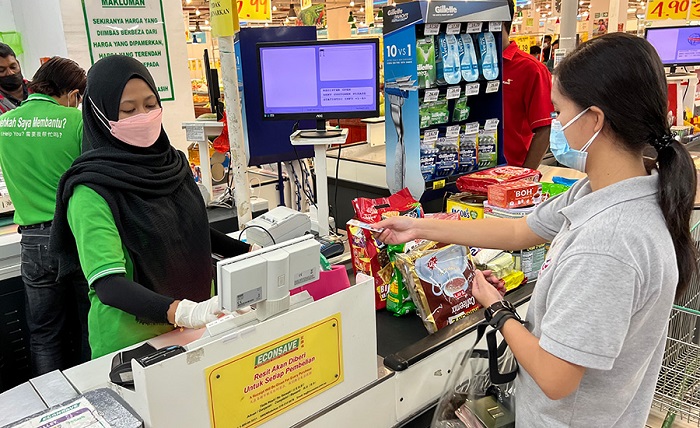
The technical backbone of My Kasih is a proprietary software developed by DIV Services, which ensures that aid delivery is both efficient and secure . At the heart of the My Kasih system is the use of the Malaysian identity card (MyKad) or a specific smartcard issued by the foundation. This technology allows My Kasih to credit monthly allowances directly to a recipient’s MyKad . When a family is enrolled in the programme, they can visit participating retail outlets to purchase groceries from an approved list. The My Kasih system ensures that the process is seamless; recipients simply use their MyKad at the point of sale, and the amount is deducted automatically. This cashless mechanism eliminates the risks associated with handling cash and ensures that the aid is used for its intended purpose—buying basic necessities like rice, cooking oil, and flour .
Love My Neighbourhood: The Food Aid Pillar
The flagship initiative of My Kasih is the “Love My Neighbourhood” food aid programme. This programme serves as the primary touchpoint with communities, providing a lifeline to families in need . The process begins when My Kasih identifies potential recipient families through government agencies and NGOs, based on criteria like household income and dependents. Once selected, a nominated member receives a monthly allowance via the My Kasih system, which can be used at over 13,000 retail outlets nationwide . This approach offers a sense of autonomy that is often missing in traditional food aid. Recipients of My Kasih aid can decide what and when to buy, reducing the stigma often tied to receiving assistance and helping families manage their daily needs quietly and confidently .
Education and Community Development
Beyond immediate food aid, My Kasih is deeply committed to breaking the cycle of poverty through education and community development. The “Love My School” student bursary programme is a core pillar of My Kasih, supporting students from underserved and Orang Asli communities with bursaries and enrichment tools that foster learning, confidence, and opportunity . The vision of My Kasih extends to ensuring that families have a pathway to a brighter future. To support this, My Kasih also engages in skills and entrepreneurship training, helping individuals achieve financial stability and avoid long-term reliance on aid . The community pillar of My Kasih also includes health awareness campaigns in collaboration with the Ministry of Health and financial literacy programmes, ensuring holistic support for the families it serves .
Government Collaboration and the SARA Programme
The effectiveness of My Kasih has been widely recognised, leading to significant collaborations with the Malaysian government. Most notably, My Kasih was appointed to deliver the Sumbangan Asas Rahmah (SARA) programme . This partnership highlights the government’s trust in the technology and distribution network of My Kasih to handle large-scale welfare initiatives. Under the SARA programme, eligible poor and hardcore poor households receive up to RM2,100 per year to purchase basic goods . The integration of My Kasih into the SARA programme allowed the government to utilise a proven, cashless aid distribution mechanism rather than creating a new system from scratch . The success of this collaboration is evident in the data; the programme recorded a usage rate of up to 99% in 2025, with RM4.8 billion spent in the local market . The experience and infrastructure of My Kasih have been instrumental in making the SARA programme a resounding success.
Impact, Transparency, and Future Growth
The impact of My Kasih is quantifiable and profound. With over RM10.4 billion channelled and 22 million lives touched, My Kasih has become synonymous with efficient charity in Malaysia . The success of My Kasih lies in its unwavering commitment to transparency. For donors, every ringgit is traceable. The cashless system of My Kasih provides full audit trails and real-time reports, ensuring that the funds are used appropriately . The 1% transaction charge, which has remained consistent since 2009, covers operational costs such as terminal maintenance, making My Kasih a cost-effective solution for aid distribution . As Malaysia continues to face economic challenges, the role of My Kasih is set to grow. With plans to expand its reach and impact, My Kasih remains a vital institution in the nation’s social welfare framework, driven by the simple belief in serving humanity.
Conclusion
My Kasih has redefined what it means to provide aid in Malaysia. By combining cutting-edge technology with a deep sense of humanity, My Kasih has created a system that is efficient, dignified, and transparent. From its humble beginnings to its current role as the backbone of major government initiatives like SARA, My Kasih stands as a model for social welfare in the region. The foundation’s journey from 25 families to over 22 million beneficiaries is a powerful story of national unity and care. As we look to the future, the legacy of My Kasih will undoubtedly continue to inspire and uplift generations of Malaysians.
FAQs
1. What is the primary purpose of My Kasih?
My Kasih is a registered charity organisation in Malaysia dedicated to providing transparent and efficient aid to low-income families and students. It uses a proprietary cashless system via MyKad to distribute food aid and educational bursaries without leakage .
2. How do I check my My Kasih or SARA balance?
You can check your balance by using the MyKasih App, visiting the official portal, or asking the cashier at any participating retail outlet when you make a purchase. You can also contact customer support for assistance .
3. What items can I purchase using the My Kasih system?
My Kasih allows recipients to purchase a wide range of essential goods. This includes basic food items like rice, cooking oil, flour, eggs, and bread, as well as personal hygiene products, household cleaning items, medicines, and school supplies .
4. What is the relationship between My Kasih and the SARA programme?
The government appointed My Kasih as the service provider for the Sumbangan Asas Rahmah (SARA) programme. The SARA aid is credited to the MyKad of recipients, utilising the existing technological infrastructure and retail network of My Kasih for distribution .
5. Who is eligible for assistance through My Kasih?
Eligibility typically depends on household income and needs. For the food aid programmes, families are often identified through government welfare agencies and NGOs. For the SARA programme, eligibility is determined by the government based on eKasih data and STR recipient lists