
Virtual Reality and Augmented Reality are changing the way we see and use technology. You may have heard about VR headsets or AR filters on your phone, but do you know how they really work? These tools are used in games, classrooms, shopping, and even in hospitals. They are not just for fun, infact, they are helping people to learn, work, and solve real-life problems in new and better ways.
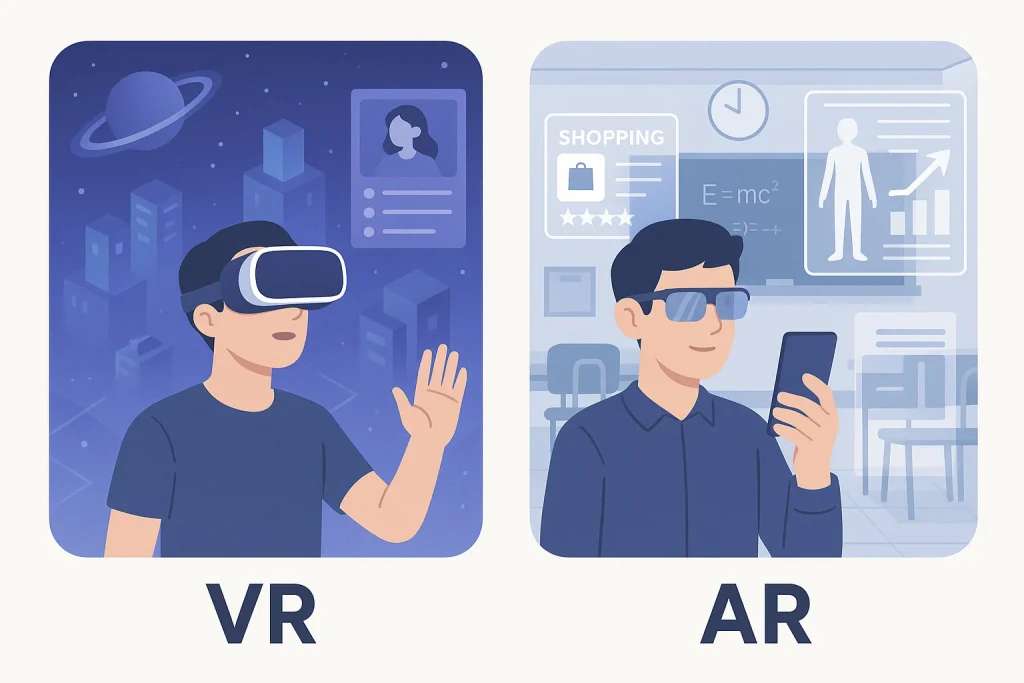
VR gives you a full digital world where everything you see is computer-made. On the other side, AR adds digital items to the real world you already see. Both feel exciting, but they work in very different ways.
In this article, I will explain all the major differences and how each is used in daily life. Whether you are a student, gamer, or curious learner, this guide will help you to understand the real value of Virtual Reality vs. Augmented Reality.
What is Virtual Reality (VR)?
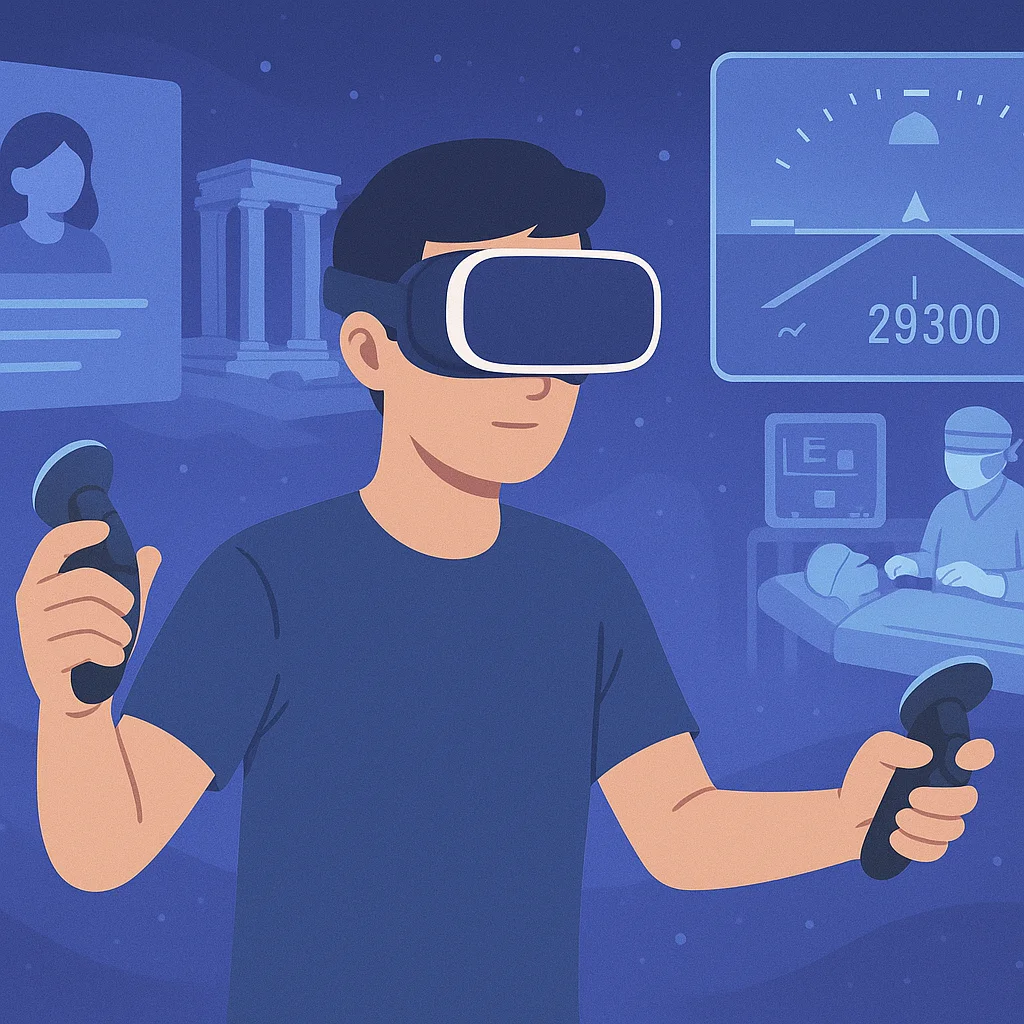
Virtual Reality is a computer-made world that you can see and explore by using special devices like VR headsets. When you wear the headset, it covers your eyes and shows you a 3D environment that feels real. You can look around, walk, and sometimes touch or move things using hand controllers.
VR blocks out the real world and replaces it with a new digital world. It is often used in video games, flight training, education, and medical simulations. For example, students can visit ancient cities, or doctors can practice surgery without using real tools. VR helps people to learn, train, or enjoy new places without leaving their room.
What is Augmented Reality (AR)?
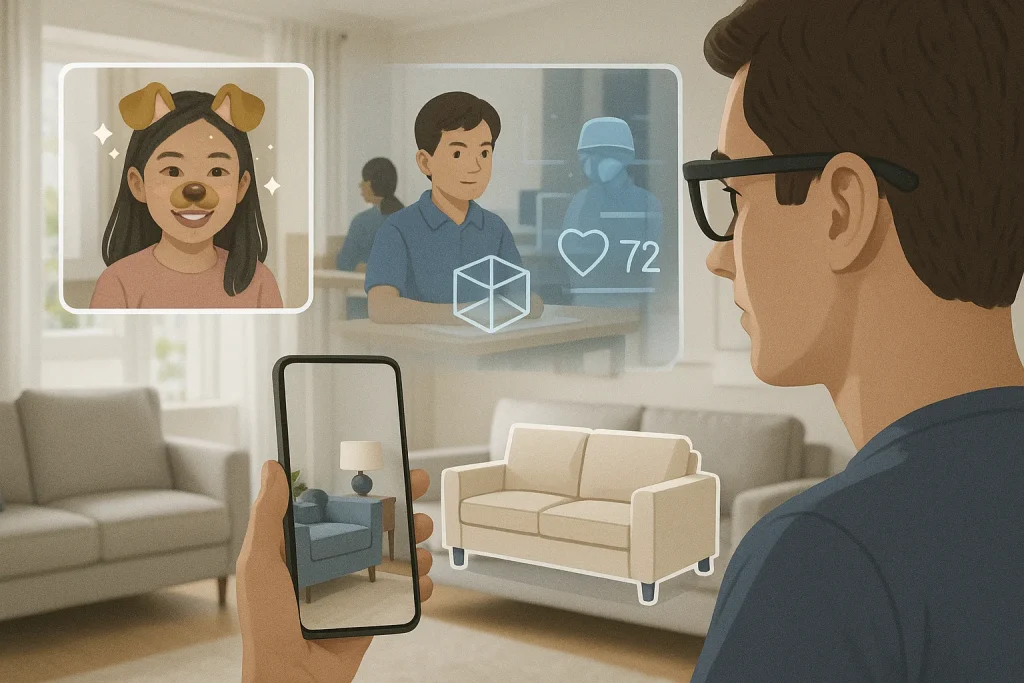
Augmented Reality (AR) adds digital things to the real world around you. You still see your real surroundings, but with extra images, sounds, or information added by a device like a smartphone, tablet, or AR glasses. These digital elements appear on your screen or in your view will mix the real and digital worlds.
AR does not block your real world. Instead, it upgraded it. For example, AR apps can show how a new sofa will look in your living room or display fun filters on your face in photos. It is also used in schools, shopping, games, and even by doctors to see data during surgery.
Major Differences Between VR and AR
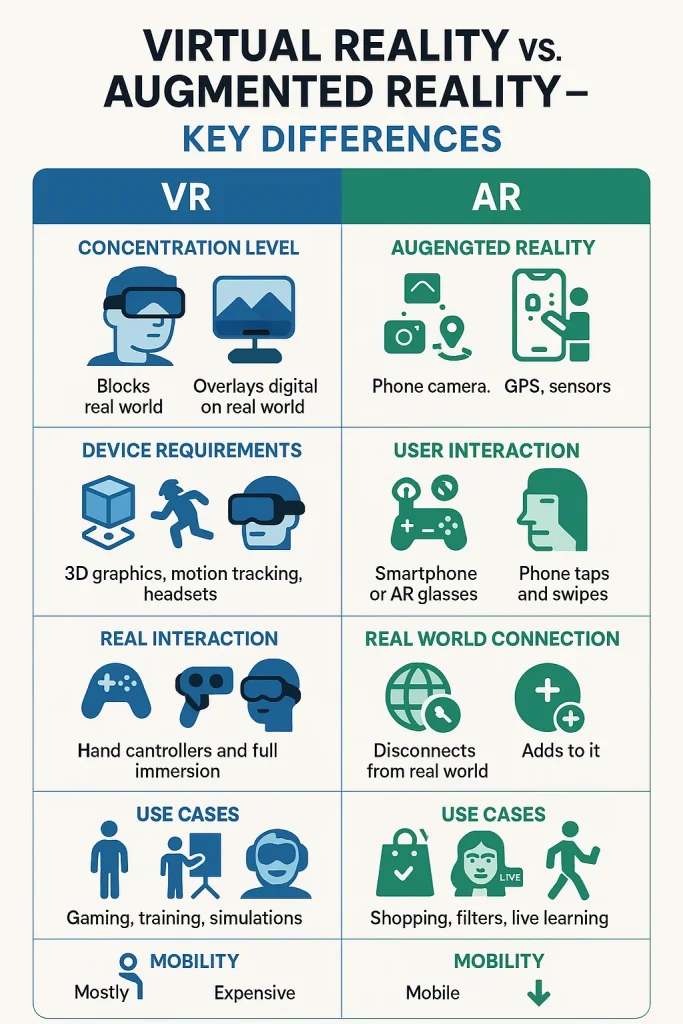
Virtual Reality and Augmented Reality may seem similar, but they are very different in how they work and what they do. Both technologies create exciting digital experiences, but they use different tools and give different results. Let’s look at the main differences:
- Concentration Level
VR gives you a full digital experience. When you wear a VR headset, it blocks your real surroundings. You feel like you are inside a completely different world. This world could be a video game, a classroom, or a space station. Everything you see and hear is computer-made.
On the other hand, AR keeps you in the real world. It just adds digital items to what you already see. For example, an AR app might place a cartoon character on your table or show directions on your street. You are still in your real place, just with added digital help.
- Technology Used
VR uses advanced 3D graphics, sensors, motion tracking, and special headsets. These tools work together to build a full virtual world around you. The system tracks your head, hand, and body movements to make the experience feel real.
AR uses different technology. It uses your phone’s camera, GPS, sensors, and software to add digital objects to your live view. The AR system understands your surroundings and places images, animations, or information on top of them.
- Device Requirements
You need a VR headset like Oculus Quest, HTC Vive, or PlayStation to use VR. Some VR systems also need a powerful PC or gaming console. You may also use hand controllers to touch or move virtual items.
On the other side, AR is easier to access. You can use it on your smartphone, tablet, or AR glasses. Many AR apps work without any extra tools, like you just need to open the app and use your phone’s camera.
- User Interaction
In VR, you interact fully inside the digital world. You can walk around, pick up objects, or fight enemies, depending on the app or game. You can use controllers or body movements to control your actions.
In AR, you interact with digital items placed in the real world. For example, you can move or rotate a digital chair to see how it fits in your room. The real world is still around you, so you usually use your phone screen to tap, drag, or scroll.
- Real World Connection
VR replaces the real world completely. It is useful when you want to escape and fully focus on a digital space. This is great for gaming, flight simulations, or virtual training.
But AR keeps you connected to your environment. It adds information and objects to your current space. This is helpful when you need to use both digital and real elements at once, like in learning or shopping.
- Use Cases
VR is mostly used in games, virtual tours, medical training, and military simulations. It is perfect for learning in a safe space or enjoying a full digital experience.
On the other hand, AR is more common in daily life. You will see it in apps like Snapchat filters, furniture shopping tools, school learning apps, and live sports scores shown on TV screens.
- Mobility
VR mostly needs you to stay in one place. You usually need a safe area where you will not bump into things.
But many VR setups require wires or fixed stations. AR is more mobile. You can use it while walking, shopping, or exploring a new place. All you need is your phone or tablet.
- Cost
VR is usually more expensive. You need a headset, sometimes a strong computer, and extra gear like controllers or sensors.
On the other side, AR is more affordable because many people already have smartphones that can run AR apps. You do not need to buy a lot of extra equipment.
Practical Applications of VR
To be very honest, Virtual Reality is not just for fun, infact, it is changing the way people learn, work, and solve real problems. I will share some simple and real-life ways VR is being used today:
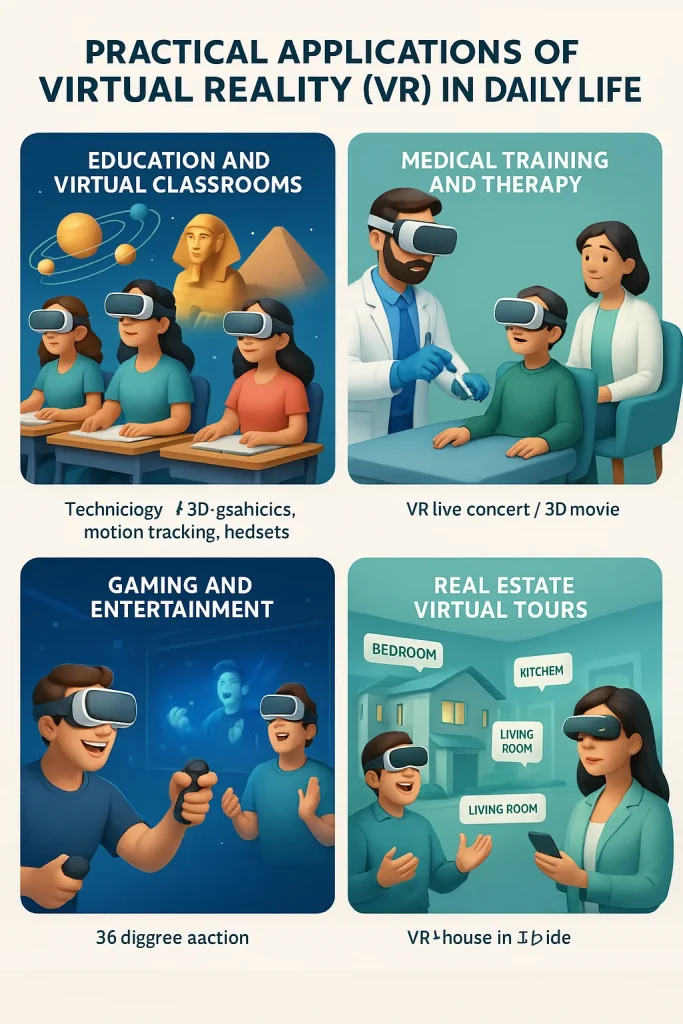
- Education and Virtual Classrooms
VR makes learning more exciting and hands-on. In schools, students can take virtual field trips to space, ancient Egypt, or inside the human body without leaving the classroom.
Teachers can use VR to explain science, history, and geography in 3D. This helps students to understand better and stay focused. It also supports students who learn better by seeing and doing, not just reading or listening.
- Medical Training and Therapy
Doctors and nurses use VR to practice surgeries and medical procedures without working on real patients. This makes training safer and more effective. VR also helps people with mental health issues.
For example, therapists use VR to treat fears, anxiety, and PTSD. Patients face their fears in a safe, virtual space and learn to stay calm. It is also used in physical therapy to help patients to move and exercise with fun virtual tasks.
- VR Gaming and Entertainment
Gaming is one of the most popular uses of VR. Players can wear headsets and feel like they are inside the game. They can explore new worlds, fight battles, or play sports in 360 degrees.
VR also offers fun in movies and concerts. You can sit in the front row of a concert or explore a 3D movie scene, all from your room. It gives people a new way to enjoy entertainment.
- Real Estate Virtual Tours
You know what VR is helping buyers and renters to visit homes without traveling. Real estate agents create virtual tours that show every room in 3D. You can walk through houses or apartments from your phone or headset.
This saves time and helps people to decide faster. It is also useful for builders and designers to show their work before it is built.
Practical Applications of AR
Augmented Reality is becoming a big part of everyday life. It helps people to shop smarter, learn faster, and work more safely. AR blends digital content with the real world, and here I will share some useful ways it is being used today:
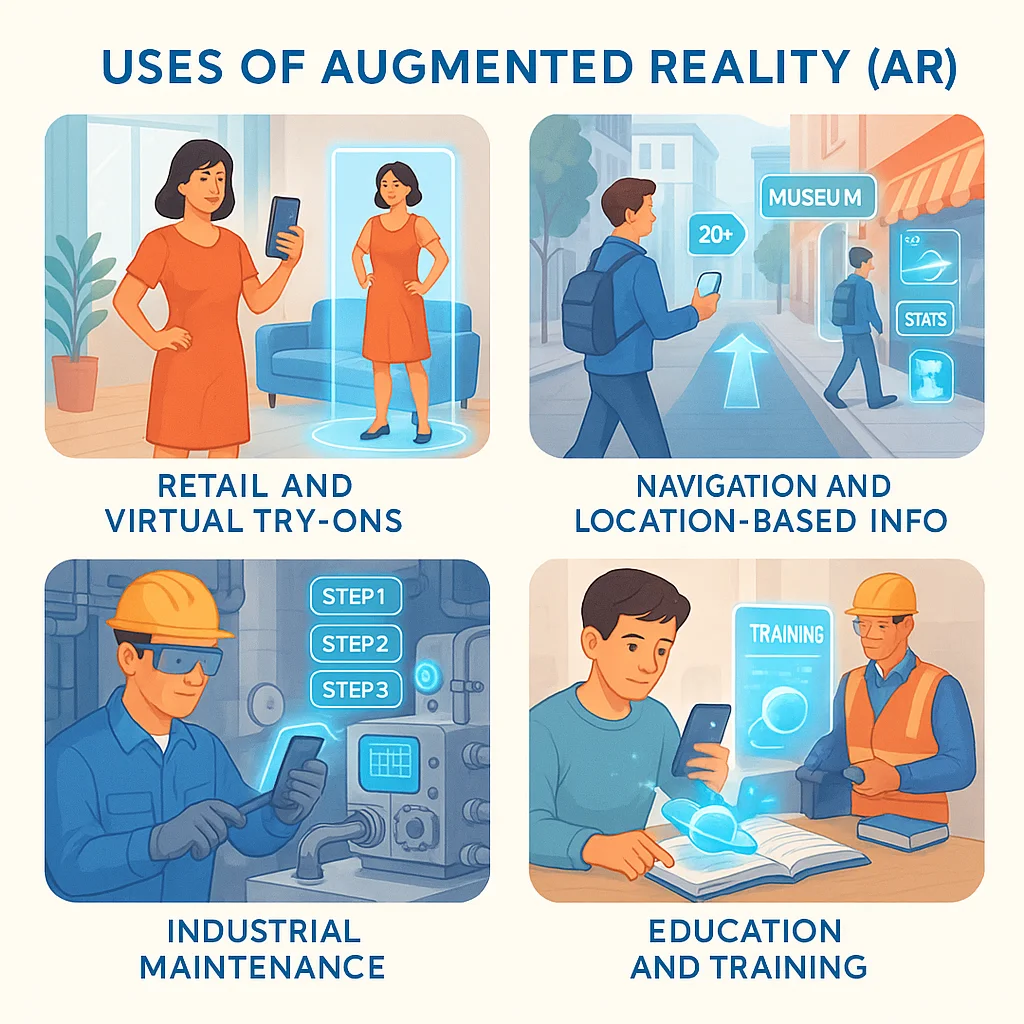
- Retail and Virtual Try-Ons
AR is changing how people shop. Many stores and apps now let you “try on” clothes, glasses, makeup, or shoes using your phone’s camera. You can see how items look on you without going to the store.
Furniture stores like IKEA use AR to show how a sofa or table will fit in your room. This helps customers to make better choices and saves time.
- Navigation and Location-Based Info
AR makes it easier to find your way around. Some apps use your phone’s camera to show arrows or signs on the real street in front of you. This helps you to know exactly where to go.
Museums and tourist spots use AR to show extra facts when you scan a statue or painting. Even sports apps use AR to show live stats and player info while you watch a game.
- AR in Industrial Maintenance
In factories and repair jobs, AR helps workers to fix machines faster. When workers wear AR glasses or use a tablet, they can see step-by-step guides or alerts right on the equipment.
This keeps their hands free and makes the job safer. It also helps new workers to learn without needing constant supervision from experts.
- AR in Education and Training
AR brings lessons to life in the classroom. Students can point their phones at a book and see a 3D image pop up. In science classes, it can show how the heart beats or how planets move in space.
For job training, it helps workers to learn complex tasks with live instructions and visuals. It improves understanding and builds skills quickly.
VR vs. AR: Which One is Better?
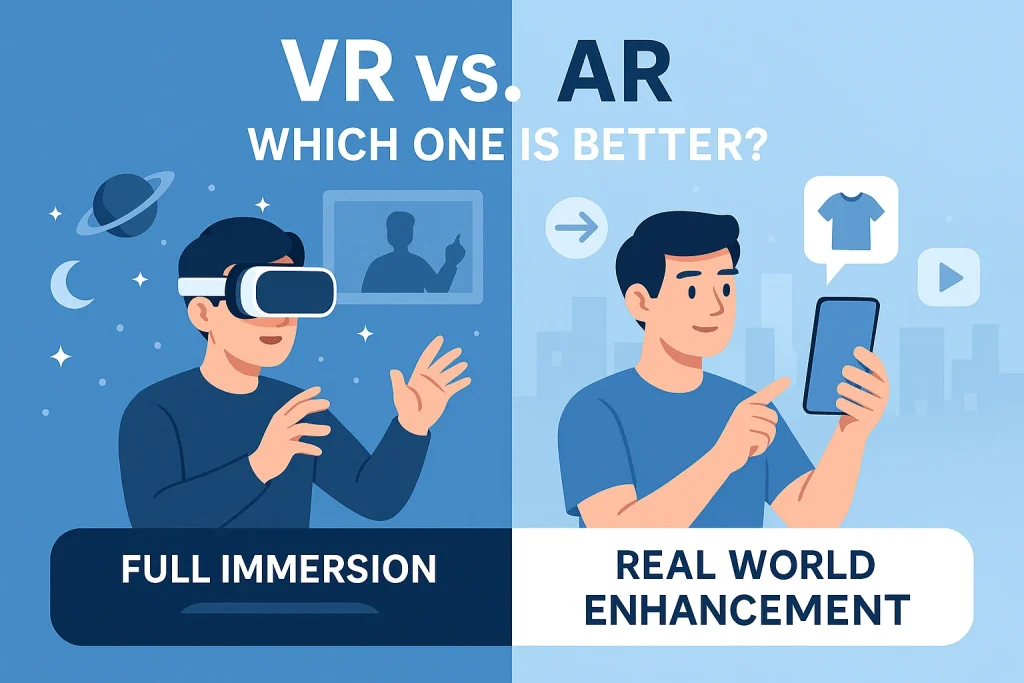
Both VR and AR are useful, but they serve different needs. If you want a full digital experience that feels real, then VR is the better choice. It takes you to new places and helps with deep learning, gaming, or training. It is perfect for those people who want to focus fully on the virtual world without any outside distractions.
On the other hand, if you need help in your real world with extra digital support, then AR is more useful. It is easier to use and works on phones you already have. AR is great for shopping, learning, and solving daily problems. So, the better choice depends on what you need. If you want full concentration, then go with VR. If you want digital help in real life, then choose AR.
FAQs
What are the main differences between virtual reality and augmented reality?
Virtual Reality creates a full digital world and replaces your real surroundings. Augmented Reality adds digital items to your real world but does not block it. VR needs special headsets, while AR often works on phones or tablets.
Which is more immersive: VR or AR?
VR is more immersive because it fully covers your eyes and places you inside a virtual world. You feel like you are part of that space. AR only adds layers to the real world, so it feels less immersive.
Can you use AR without a headset?
Yes, you can use AR without a headset. Most AR apps work on smartphones and tablets using the built-in camera and sensors. You just need to download an AR-supported app.
What industries benefit most from VR and AR?
Many industries use VR and AR. VR is useful in gaming, education, healthcare, and flight training. AR helps in retail, manufacturing, navigation, healthcare, and classroom learning. Both are growing in business and daily life.
Is VR more expensive than AR?
Yes, VR is mostly more expensive. It needs special headsets, controllers, and sometimes a strong PC or console. AR is more affordable because it works on regular smartphones and does not need extra hardware.